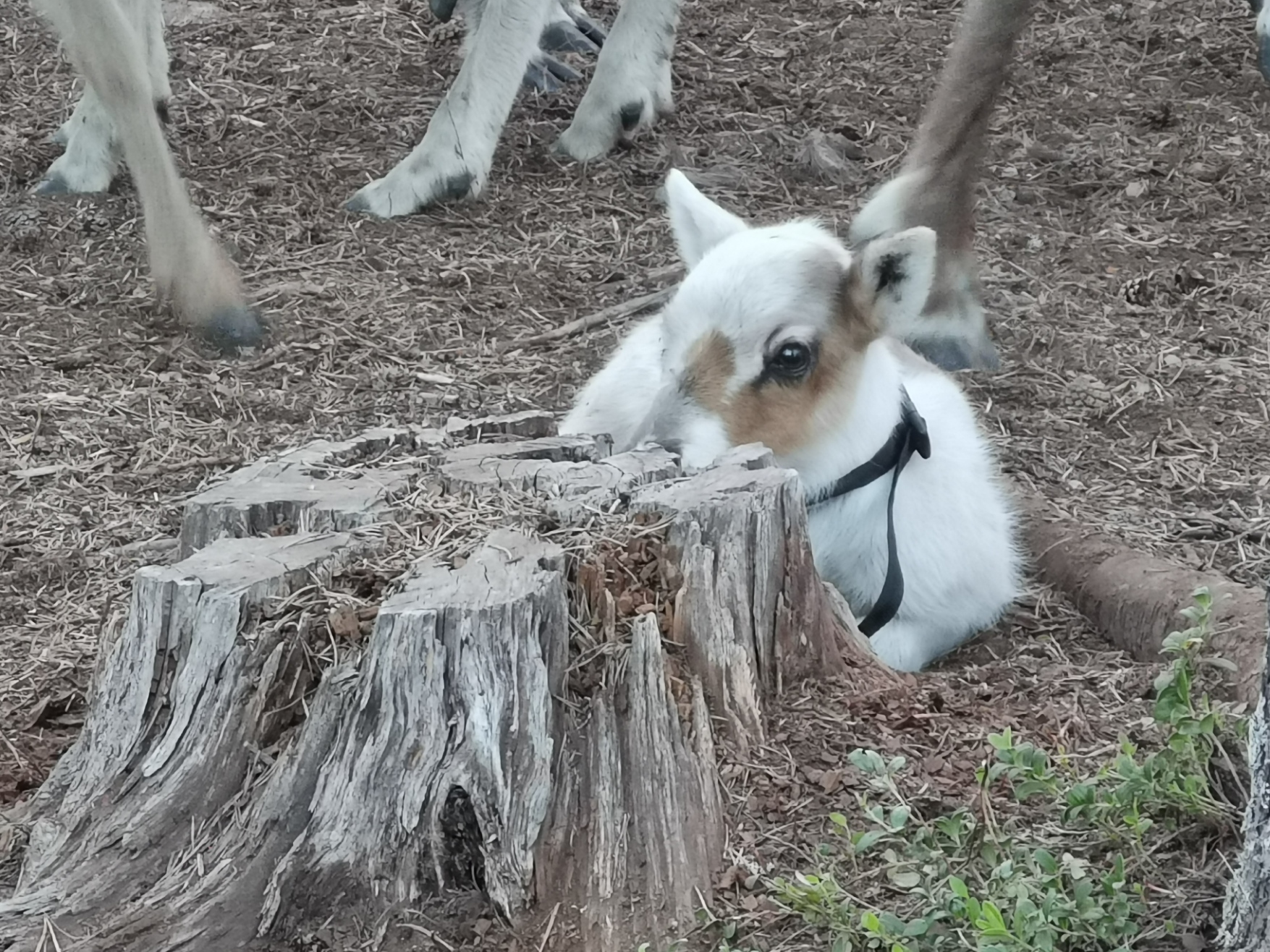
In the summer, reindeer may appear matted.
But don’t worry, they’re doing just fine!
During the warmer months, the reindeer’s thick winter coat sheds to make way for lighter summer fur. This fur comes off in larger patches, occasionally revealing the smooth, sleek summer coat underneath. As the fur transitions, reindeer can sometimes look rather scruffy. This is completely normal.
White reindeer, in particular, often resemble “plucked chickens” during June and July. By August, however, they have shed their old fur and are once again shiny and beautiful.
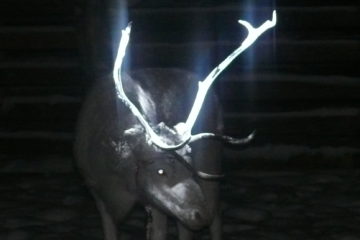
Both male and female reindeer grow new antlers every year. During this time, the antlers grow at an astonishing rate of about two centimeters per day — the fastest-growing bone tissue in the world.
In the summer, the growing antlers are soft, sensitive, and covered with a layer of skin. By August, the antlers have fully grown, and reindeer begin to rub them against hard surfaces, such as trees, to remove the skin.
Male reindeer use their antlers during the rutting season to battle other males and attract females. Females, on the other hand, use their antlers to demonstrate strength and secure a strong position within the herd.
Calf Markings in Our Cooperative
Summer is also the time for calf ear marking in reindeer herding. In Finland, every reindeer is privately owned, and the ownership is indicated by markings on the reindeer’s ear.
Reindeer herding work is deeply tied to the reindeer, nature, the traditions of our herding cooperative, and the adjustments needed to manage the environment in which our reindeer graze throughout the year. This practice still follows centuries-old traditions.
Of course, just like the rest of society, reindeer herding is constantly evolving and incorporating new technologies. Our grandparents and parents used to herd reindeer on foot and by skis in the winter. While reindeer herding in summer is still often done the traditional way—on foot—during winter and autumn, we now use ATVs and snowmobiles.

Even in summer, while we continue to work on foot, we make use of modern technology that greatly helps us. About 30 of our female reindeer wear GPS collars, providing us with accurate geographical data about their locations. This allows us to know when the reindeer have gathered in large herds and exactly where they are. As a result, we no longer need to wander through forests and wetlands in search of them. Instead, we can head straight to the herds and try to lead them into the marking enclosures we have set up in different areas of our herding cooperative. Thanks to the GPS collars, we typically walk no more than 10 kilometers in a night, compared to the 20-30 kilometers we used to cover just a decade ago.
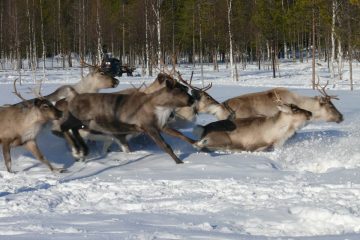
While modern technology is a great help, it’s not as effective as the oldest tool at our disposal: blood-sucking insects. These insects actually assist us in gathering the herds. That’s why calf markings are done in mid-summer. The biting and blood-sucking insects cause the reindeer to group together in large herds. This high insect season, known as räkkä, begins in June and is quite stressful for the reindeer.
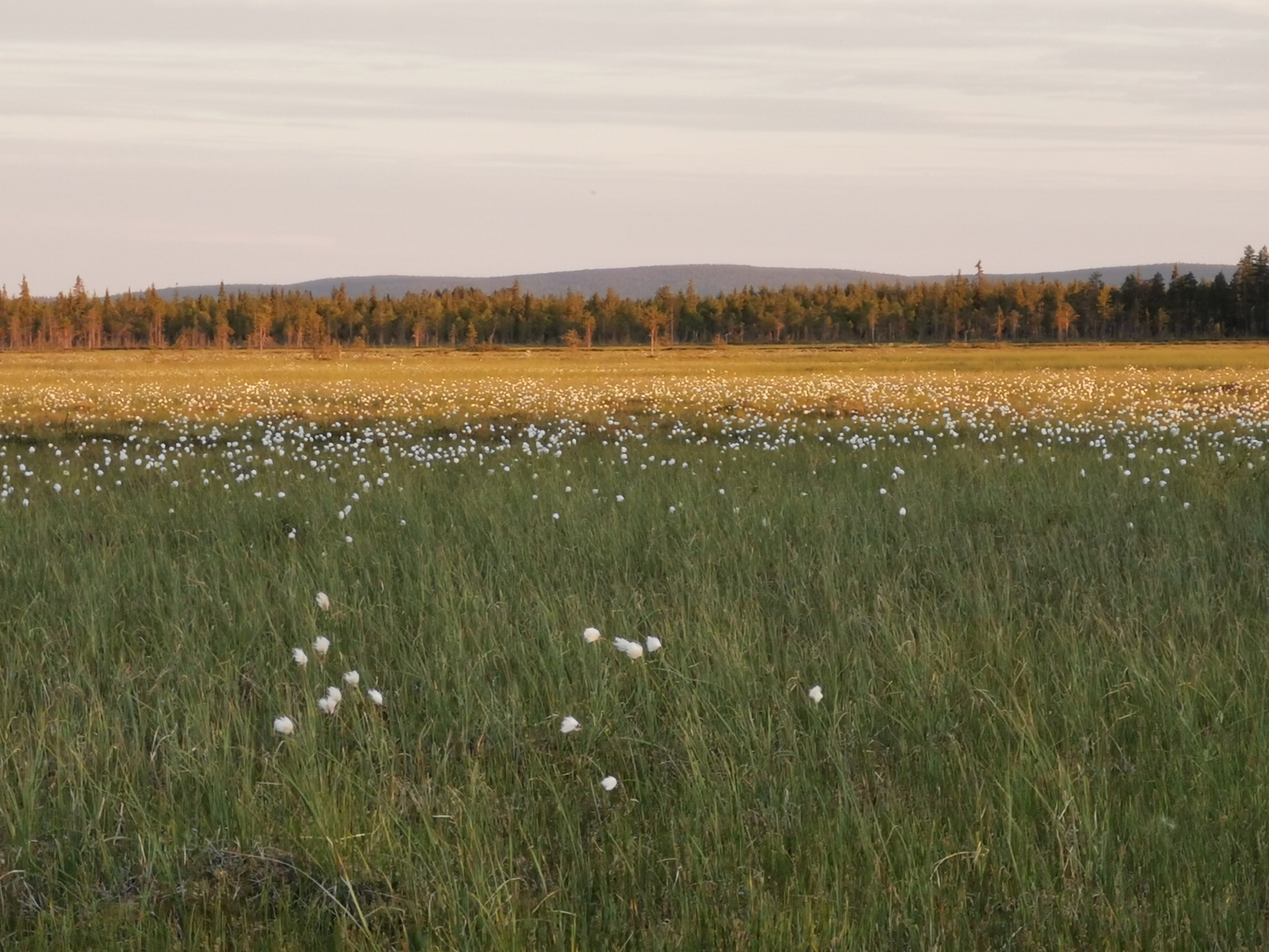
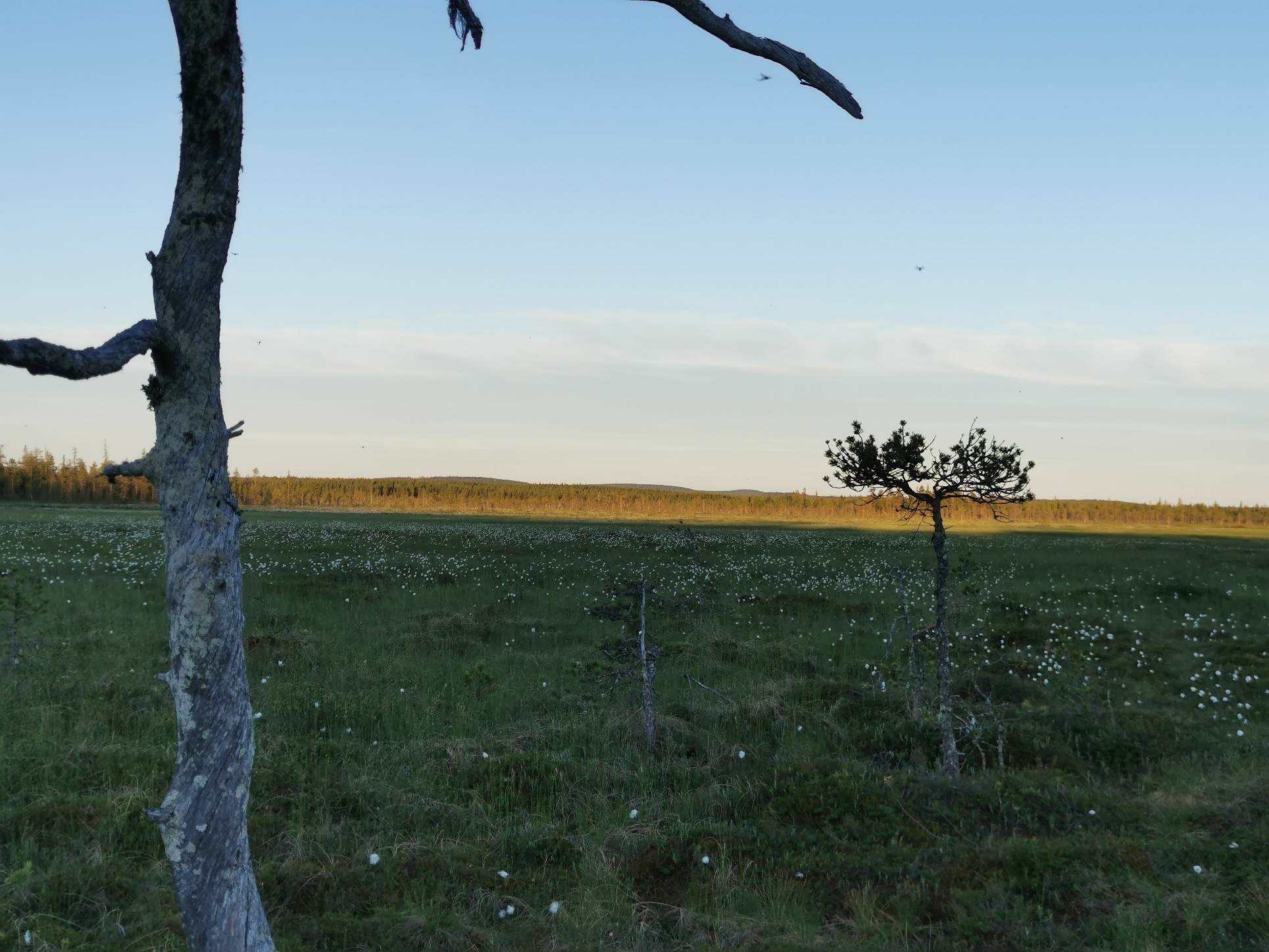
Räkkä and Reindeer Herding: A Natural Help
Räkkä makes the reindeer gather in open, windy areas—mainly wetlands in our environment. The warmth and carbon dioxide released by large herds rise into the air, confusing the insects and making it harder for them to locate the reindeer. With the reindeer naturally inclined to stay in large groups, it becomes easier for us to move the herds into fenced areas for calf marking. Without the insects, this would be impossible. So, in a way, we rely on mosquitoes here—they are the best reindeer herders.
Reindeer don’t handle heat very well. For them, a cool summer is far better than a hot one. During extremely warm summers, reindeer tend to run restlessly and eat very little. Since they don’t have sweat glands, they release excess heat through their mouths, making them prone to overheating. Because of this, all ear marking work during the summer is done late in the evening or at night, when the weather is cooler. This helps minimize stress for the animals.
Calf Marking Process
Once the reindeer are gathered into the nearest fence, the unmarked calves are caught either by hand or using a vimpa (a wooden stick with a rope at the end). A plastic number tag is hung around each calf’s neck, and then they are released to reunite with their mothers. At this point, the fence becomes alive with the sounds of reindeer calling out to each other—mothers and calves searching for one another.
When all the calves have found their mothers, the fence goes silent again. The calves drink from their mothers’ “milk bars” and soon fall asleep. We then slowly walk around the fence in pairs, drawing the ear markings of the mothers each calf is following. Once we’ve finished the drawings, we compare them to ensure they match, checking any marks we’re uncertain about. After confirming the owners of all the calves, we catch them again and mark them with their rightful owner’s earmark. After the markings are complete, the reindeer are released back into the wild.
The marking process lasts about 1-2 weeks, depending on the weather and räkkä conditions. The calves we can’t reach during the summer marking are marked during the autumn round-ups.
Exhausted but Fulfilled
Calf marking always reminds me of the excitement I felt around Christmas when I was a child. I can’t wait to see the new calves born each year. Seeing a familiar reindeer doe with a strong, healthy calf is one of the best feelings I know—it’s a sign that life continues. Even though I’m exhausted from the night work, after the markings, I truly gain a new appreciation for those who do night shifts year-round. For us, it’s only a few weeks in the summer, and the midnight sun and 24/7 daylight help us manage with less sleep. Still, my summer tradition is to spend a week after the markings feeling like a zombie, trying to adjust to a new sleep schedule.
But even with the exhaustion, I love it.