Reindeer Herding Language ~ Learn some basic concepts and words
Sleigh reindeer
a sleigh reindeer is a fully tamed reindeer trained to pull a sleigh, primarily working with travelers during the winter season.
Antlers
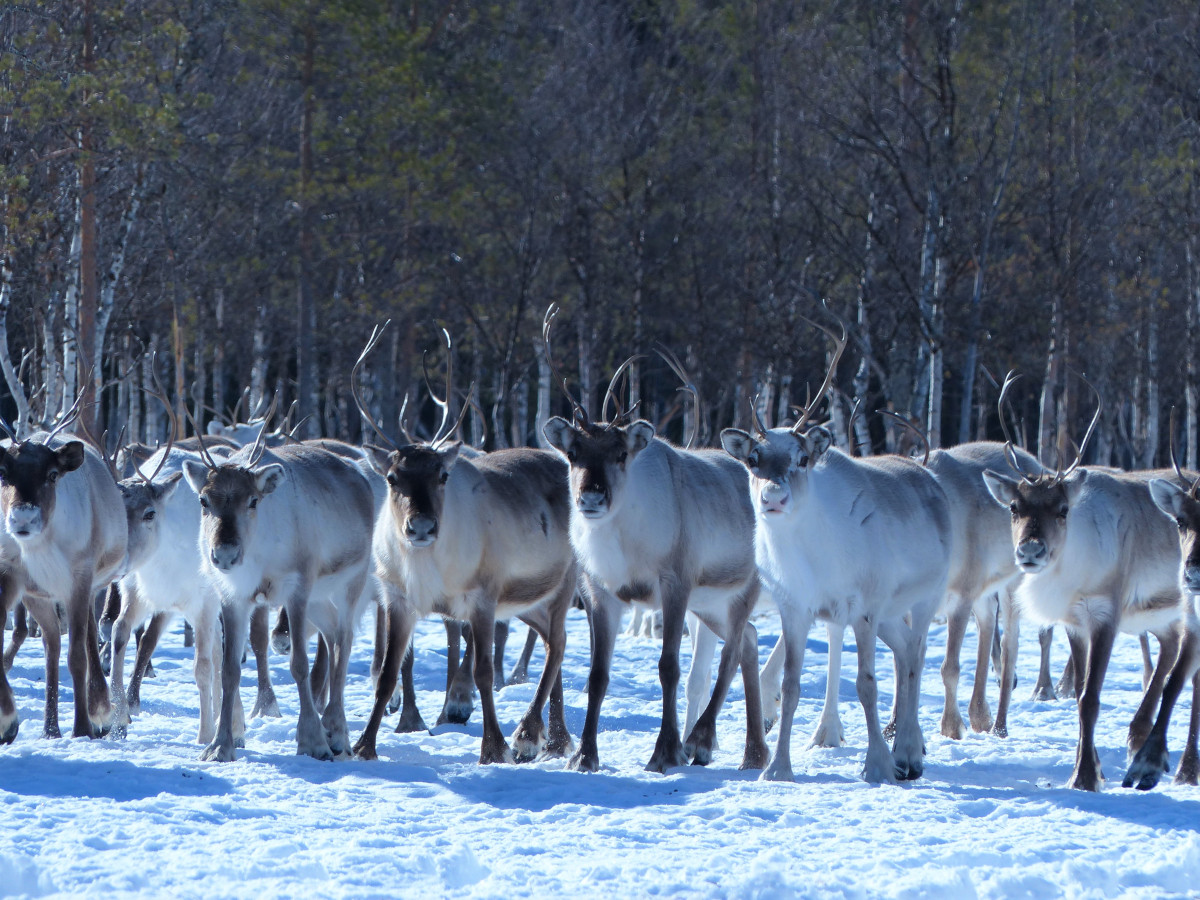
Reindeer have antlers, not horns. Unlike horns, which are permanent and made of keratin (like those of cows or goats), antlers are made of bone and are shed and regrown annually.
Cooperative
a reindeer herding cooperative is a community formed by reindeer herders within a specific area that has defined geographical boundaries marked on a map and a designated maximum number of reindeer. Every herder belongs to one cooperative. Cooperatives differ in the size of their land area and the number of reindeer they manage. Each cooperative is independently responsible for reindeer herding within its designated area.
Ages of the reindeer
Vasa (Calf): baby reindeer in its first 0-7 months Kermikkä: a reindeer in its first winter and second summer (about 8-12 months) Urakka: a male reindeer from its second summer to third spring Vuonelo, Vuongeli: a female reindeer from its second summer to third spring Vuorso: a three years old reindeer Kunteus: a four years old reindeer Kosate: a five years old reindeer Maakkana: a six years old reindeer Nimiloppu: a seven years or older reindeer
Some colours of the reindeer
Korpinmusta: Raven’s black, dark black
Musikki: blackish Kalppinokka: white nose mark Suivakko: blondish Valkko: white Rooki: blondish and spotted Kirjakka: darkish and white spotted Pilkkinokka: blond spot on the nose Ryssänvalkko: yellowish blond Luostakka: Blond side stipes Poronvärinen: Reindeer colored
Sex
Hirvas: Stag
Vaadin: Doe
Härkä: Gelding
Some actions
Roukua: reindeer is making noises
Tolvata: reindeer is running fast
Nulkata: reindeer is running steadily, slower speed
Kaivaa: reindeer is digging food under snow
Keloa: reindeer is rubbing the velvet off its antlers
Runo
a doe that has not given birth to a calf during the current year.
Note: In Finnish, “runo” also means “poem.”
Nulppo
a male reindeer that has shed its antlers and has not yet started growing new ones.
Nuppa
a doe that has shed her antlers or naturally has no antlers
Kopara
the cloven hoof of a reindeer
Round-up
A reindeer round-up is a traditional herding event where reindeer are gathered together, usually for purposes such as calves marking and managing the production of meat. This seasonal practice is also essential in overseeing the welfare of the herd.
Ear Mark
Each reindeer owner has a unique personal ear mark, which functions much like a social security number — an individual identifier for their reindeer. The owner marks their reindeer by cutting this distinctive pattern into the tip of the reindeer’s ear. The ear mark is visually striking and can be recognized from a long distance, making it unnecessary to capture the animal to determine its owner. A person familiar with ear marks can identify ownership simply by observing the reindeer from afar.
Reindeer Herder
a reindeer herder is a professional who practices reindeer husbandry in accordance with the Reindeer Husbandry Act, within the legally defined reindeer herding area in northern Finland. For this reason, there are no official reindeer herders in Helsinki or elsewhere in southern Finland, as reindeer herding is restricted to the designated northern region.
Reindeer Husbandry Area
In Finland, the reindeer herding area is located in the Lapland region (excluding Kemi, Keminmaa, and Tornio, which are part of the Meri-Lappi area). The southernmost parts of the herding area border the northern parts of Northern Ostrobothnia and the northernmost areas of Kainuu.